Analysis of Science Literacy Abilities Through Authentic Assessment of High School Students
Article Sidebar
Main Article Content
Abstract
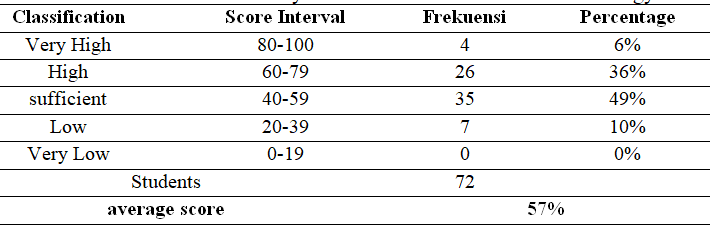
Indonesian students' scientific literacy skills from 2000 to 2022 remain low, as their scores are below the average PISA (Philosophy of Science and Technology) completion score. This study aims to analyze high school students' scientific literacy skills in the field of biological technology innovation through authentic assessment. This research is descriptive and quantitative. The study was conducted at SMAN 1 Medan. The population was all 432 tenth-grade students from 12 classes. The sample size was 72 students from two classes: class X1 and class X5. Simple random sampling was used as the sampling technique. Data collection used authentic assessment instruments, consisting of 10 essay questions and a 25-item questionnaire. The data were analyzed using a descriptive percentage formula. The results showed that students' scientific literacy skills were in the adequate category, with a percentage of 57%. A score of 57% reflects that most students have a basic understanding of scientific concepts, but are unable to fully master them or apply them optimally in real-life contexts. Internal factors influencing students' scientific literacy skills are categorized as good, with a percentage of 73%, and external factors are categorized as good, with a percentage of 75%. The research results show that students' scientific literacy skills are generally in the "adequate" category, although influencing factors, such as the availability of facilities and infrastructure, the quality of learning, and the role of teachers, are classified as "good." This indicates an imbalance between the potential of a supportive learning environment and suboptimal student learning outcomes.
Article Details

This work is licensed under a Creative Commons Attribution-ShareAlike 4.0 International License.
Authors who publish with this journal agree to the following terms:
- Authors retain copyright and grant the journal right of first publication with the work simultaneously licensed under a Creative Commons Attribution-ShareAlike 4.0 International License that allows others to share the work with an acknowledgement of the work's authorship and initial publication in this journal.
-
Authors are able to enter into separate, additional contractual arrangements for the non-exclusive distribution of the journal's published version of the work (e.g., post it to an institutional repository or publish it in a book), with an acknowledgment of its initial publication in this journal.
- Authors are permitted and encouraged to post their work online (e.g., in institutional repositories or on their website) prior to and during the submission process, as it can lead to productive exchanges and earlier and greater citation of published work.

Bio Ilmi: Jurnal Pendidikan by http://jurnal.radenfatah.ac.id/index.php/bioilmi is licensed under a Creative Commons Attribution-ShareAlike 4.0 International License.
How to Cite
References
Fuadi, Husnul, Annisa. Z. R., Jamaluddin, & Abdul. W. J. (2020). Analisis Faktor Penyebab Rendahnya Kemampuan Literasi Sains Peserta Didik. Jurnal Ilmiah Profesi Pendidikan, 5( 2): 108–116.
Gani, A. R. F., Zaimah, U., & Wulandari, S. R. (2020). Studi Literatur Upaya Meningkatkan Literasi Informasi Siswa Pada Mata Pelajaran Biologi Selama Belajar Daring Efek Covid-19. Bioilmi: Jurnal Pendidikan, 6(2), 129-136.
Hanafi, M. (2019). The Effect Of Learning Habits And Teachers ’ Role In Learning, Jurnal Kajian Pendidikan Akuntansi Indonesia. 5(1): 1–15.
Hasruddin, Harahap, F., & Mahmud. (2018). Penyusunan Instrumen Keterampilan Proses Sains Berbasis Inkuri Kontekstual pada Perkuliahan Mikrobiologi. Konferensi Pendidikan Biologi Prosiding, 15(01): 627–634.
Irawan, A. (2024). Model Penilaian Otentik Arah Kurikulum. Al-Mujaddid: Jurnal Ilmu Agama, 6 (1): 09-20.
Jufri, A. W., (2017). Belajar dan Pembelajaran Sains: Model Dasar Menjadi Guru Profesional. Bandung: Pustaka Reka Cipta.
Jufrida, F. R., Basuki, M. D. P., & Nugroho, A. D. P. (2019). Analisis Faktor Yang Mempengaruhi Hasil Belajar IPA Dan Literasi Sains Di SMP Negeri 1 Muaro Jambi. Jurnal Pendidikan Fisik, 4(2): 32-40.
Marshanda, F. L., Destiansari, E., & Meilinda. (2025). Application of Problem Based Learning Based E-LKPD on Digital Literacy and Critical Thinking Skills of High School Class X Students. Bioilmi: Jurnal Pendidikan, 11(1), 1-12.
Mayasari, T. (2019). Analisis Kemampuan Literasi Sains Siswa Kelas XI SMAN Dikota Yogyakarta Mata Pelajaran Biologi Ditinjau Dari Kefavoritan Sekolah. Jurnal Edukasi Biologi, 8(1): 86-92.
Mellyzar, M., Zahara, S. R., & Alvina, S. (2022). Literasi sains dalam pembelajaran sains siswa SMP. Pendekar: Jurnal Pendidikan Berkarakter, 5(2): 119-124.
Miski, R. (2015). Pengaruh Sarana Dan Prasarana Terhadap Hasil Belajar Siswa. Tadbir Muwahhid, 4(2): 69–73.
Mulwandani, Z., Fajrina, S., Lufri, & Fadilah, M. (2024). Enhancing Students Sustainability Literacy through a Green Economy-Based Project-Based Learning Model. Bioilmi: Jurnal Pendidikan, 10(2), 99-104.
Mulyana, A., Khoirunnisaa, A., Darma, C., Uthartianty, R., Suwanto, S., & Gianjar, G. (2019). Model Penilaian Autentik pada Pendidikan Kesetaraa Program Paket C dalam Jaringan. Bandung: PP-Paud dan Dikmas.Nasution, L. M. (2017). Statistik Deskriptif. Hikmah, 14(1): 49-55.
Organization for Economic Cooperation and Development (OECD). (2004). PISA 2003. Paris: OECD Publishing.
Organization for Economic Cooperation and Development (OECD). (2007). PISA 2006. Paris: OECD Publishing.
Organization for Economic Cooperation and Development (OECD). (2010). PISA 2009. Paris: OECD Publishing.
Organization for Economic Cooperation and Development (OECD). (2013). PISA 2012 Results in Focus . Paris: OECD Publishing.
Organization for Economic Cooperation and Development (OECD). (2016). PISA 2015 Results in Focus. Paris: OECD Publishing.
Organization for Economic Cooperation and Development (OECD). (2019). PISA 2018 Assesment and Analytical Framework. Paris: OECD Publishing.
Organization for Economic Cooperation and Development (OECD). (2023). PISA 2022 Assesment and Analytical Framework. Paris: OECD Publishing.
Pakpahan, N. A., & Hasruddin, H. (2021). Kemampuan Literasi Materi Sistem Gerak Siswa SMA pada Masa Pandemi Covid-19. Jurnal Review Pendidikan Dan Pengajaran (JRPP), 4(1): 162-172.
Palupi, D., Ngatman, & Susiani, S., T. (2021). Pengaruh Bimbingan Belajar Orang Tua Terhadap Hasil Belajar Ipa Siswa Kelas Iv Sdn Sekecamatan Puring Tahun Ajaran 2020/2021. Kalam Cendekia: Jurnal Ilmiah Kependidikan, 9(3): 60-73.
Prihatini, E. (2017). Pengaruh Metode Pembelajaran Dan Minat. Formatif : Jurnal Ilmiah Pendidikan MIPA, 7(2): 171–179.
Purwanto. (2013). Prinsip-prinsip dan Teknik Evaluasi Pengajaran. Bandung: Remaja Rosda Karya.
Rahmayanti, S. P., Andayani, Y., & Al Idrus, S. W. (2021). Studi Kemampuan Literasi Sains Mahasiswa Pendidikan Kimia Terkait Etnosains Bau Nyale. Jurnal Pijar Mipa, 16(3): 326–332.
Retariandalas. (2017). Pengaruh Minat Membaca Dan Motivasi Belajar Terhadap Prestasi Belajar IPA Siswa. Formatif: Jurnal Ilmiah Pendidikan MIPA, 7(2): 190–197.
Sugiyono. (2011). Metode Penelitian Kuantitatif Kualitatif dan R & D. Bandung: Alfabate.
Supriwardi, L., Zulyusri, Z., & Lufri, L. (2021). Meta-Analisis : Pengaruh Model Problem Based Learning Terhadap Kemampuan Literasi Sains Peserta Didik. Bioilmi: Jurnal Pendidikan, 7(2), 120-128.
Sutrisna, N. (2021). Analisis Kemampuan Literasi Sains Peserta Didik SMA di Kota Sungai Penuh. Jurnal inovasi penelitian, 1(12): 2683-2694.
Takda, A., Arifin, K., Tahang, L. (2023). Profil Kemampuan Literasi Sains Peserta Didik SMA Berdasarkan Nature Of Science Literacy Test (NoSLiT). Jurnal Penelitian Pendidikan Fisika, 8(1): 19-27.
Yusmar, F., & Fadilah, R. E. (2023). Analisis Rendahnya Literasi Sains Peserta Didik Indonesia: Hasil PISA dan Faktor Penyebab. LENSA (Lentera Sains): Jurnal Pendidikan IPA, 13(1): 11-19.
Zuhri, M. M., Adnan, A., & Saparuddin, S. (2023). Analisis Kemampuan Literasi Sains Peserta Didik SMA Kelas X IPA di Kota Makassar dalam Menyelesaikan Soal PISA. Bioscientist: Jurnal Ilmiah Biologi, 11(2): 1892-1902.